
Maccabi Man: Mission‑Mode Racing at the Jewish Olympics
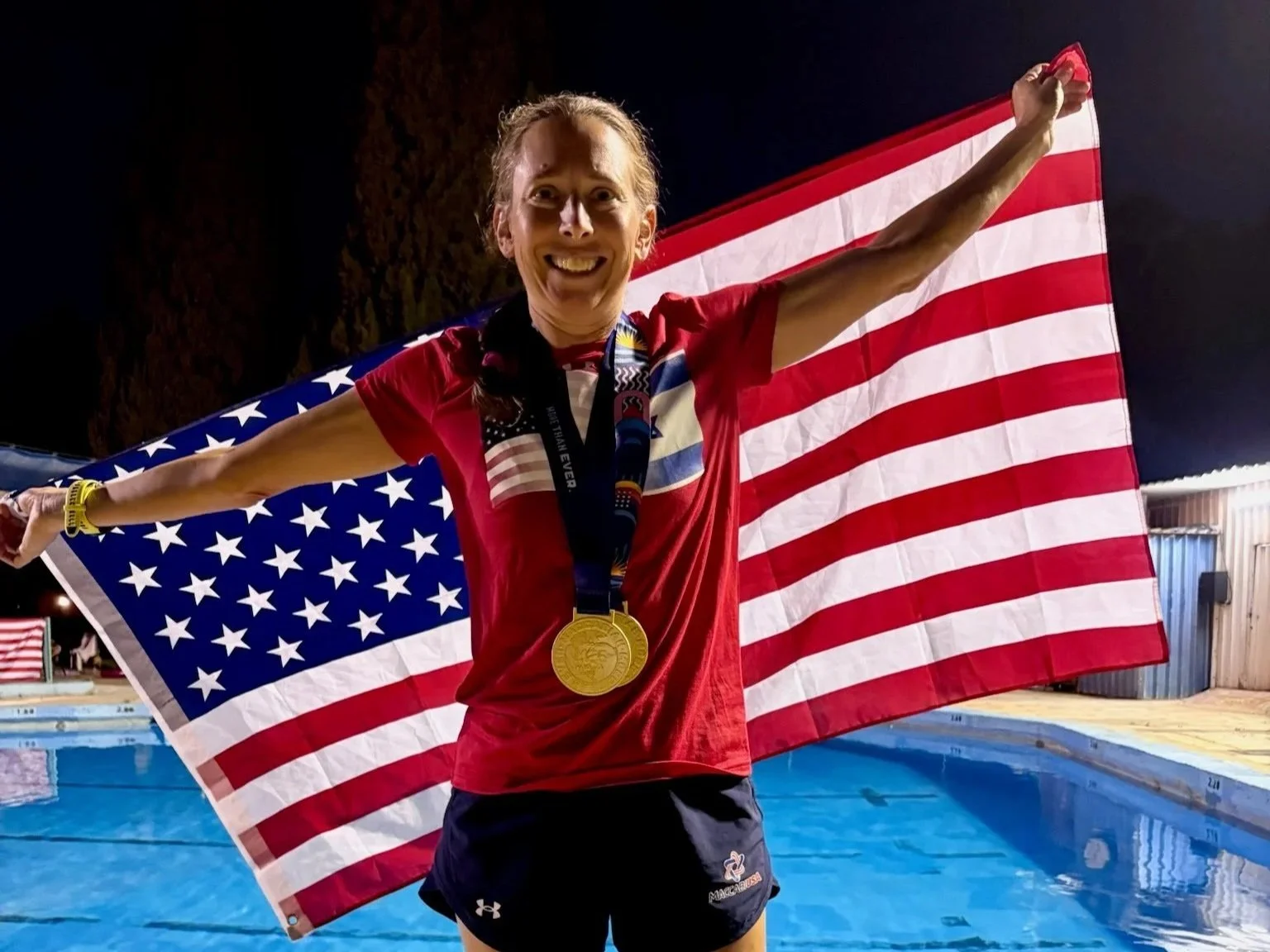
The World Maccabiah Games, often called the Jewish Olympics, have been held for nearly a century and are officially recognized by the International Olympic Committee as a regional multi-sport event. The Games were born from necessity. In early‑20th‑century Europe, Jewish athletes were excluded from sports clubs and often left off national Olympic teams. In response, Jewish communities built their own clubs, their own leagues, and ultimately their own international competition.
Today, the World Maccabi Games traditionally bring 10,000 athletes from 50+ nations to Israel. This year was different.
In the aftermath of October 7, 2023, global instability reduced 2026 participation to 4,500 athletes, yet this edition was widely regarded as the most significant Maccabi Games ever held. Even athletes from countries that refused to send official delegations traveled independently and were embraced fully.
The Maccabi Man is the toughest endurance event of the Games. It’s a four‑race series held across Israel with one day of rest between each. The four events are:
Sprint Triathlon
3K Open Water Swim
Half Marathon
Cycling Time Trial
Athletes compete for age‑group medals and the overall title.
Just like the sport of triathlon, Maccabi Man is one of the few international events where elite athletes race alongside athletes pushing 70 years of age, all on the same course, at the same time, under the same conditions.
Israel sends its very best — national‑team triathletes, elite runners, and top cyclists.
Hogan Performance athlete Katherine Phillips was proud to represent Team USA in this year’s Games, and participated in the Maccabi Man competition. Across four races in four regions of Israel, Katherine delivered one of the strongest American performances of the Games:
Maccabi Man age group champion
Maccabi Man 2nd woman overall
Open Water Swim overall champion
Half Marathon age group champion, 3rd overall among Maccabi Man competitors
Triathlon - 2nd age group
Four races. Four medals. Katherine’s results placed her among the top athletes of the entire Games, across all ages. Here’s a little recap of each race below!
Mission One: Asi Stream — Sprint Triathlon (Modified)
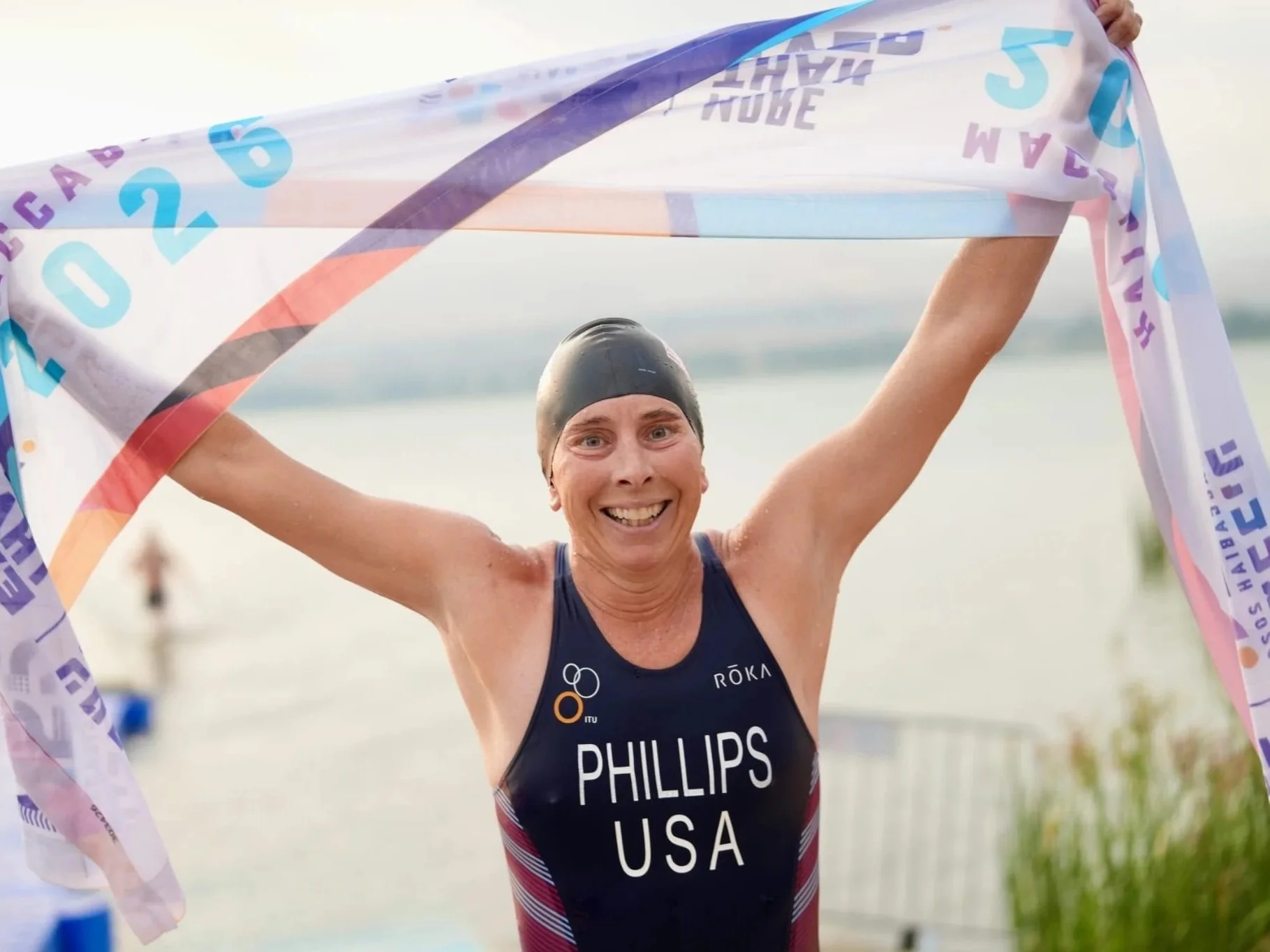
The opening triathlon at the Asi Stream began with a curveball. Hours before the start, officials announced that bacterial levels in the water had spiked, canceling the swim and replacing it with an additional run. The new format — 5K run / 20K bike / 1.5K run — reshuffled the competitive deck.
Athletes arrived before dawn to a transition area swept and cleared by the IDF. Warm‑ups were confined to a narrow strip of pavement. The race launched fast, the Israeli women surging in a pack. Katherine held her line, ran aggressively, and kept her composure through a not-previewed and very long second loop on the final run.
She finished second in her age group, earning the first American medal of the 2026 Games.
Mission Two: Sea of Galilee — 3K Open Water Swim
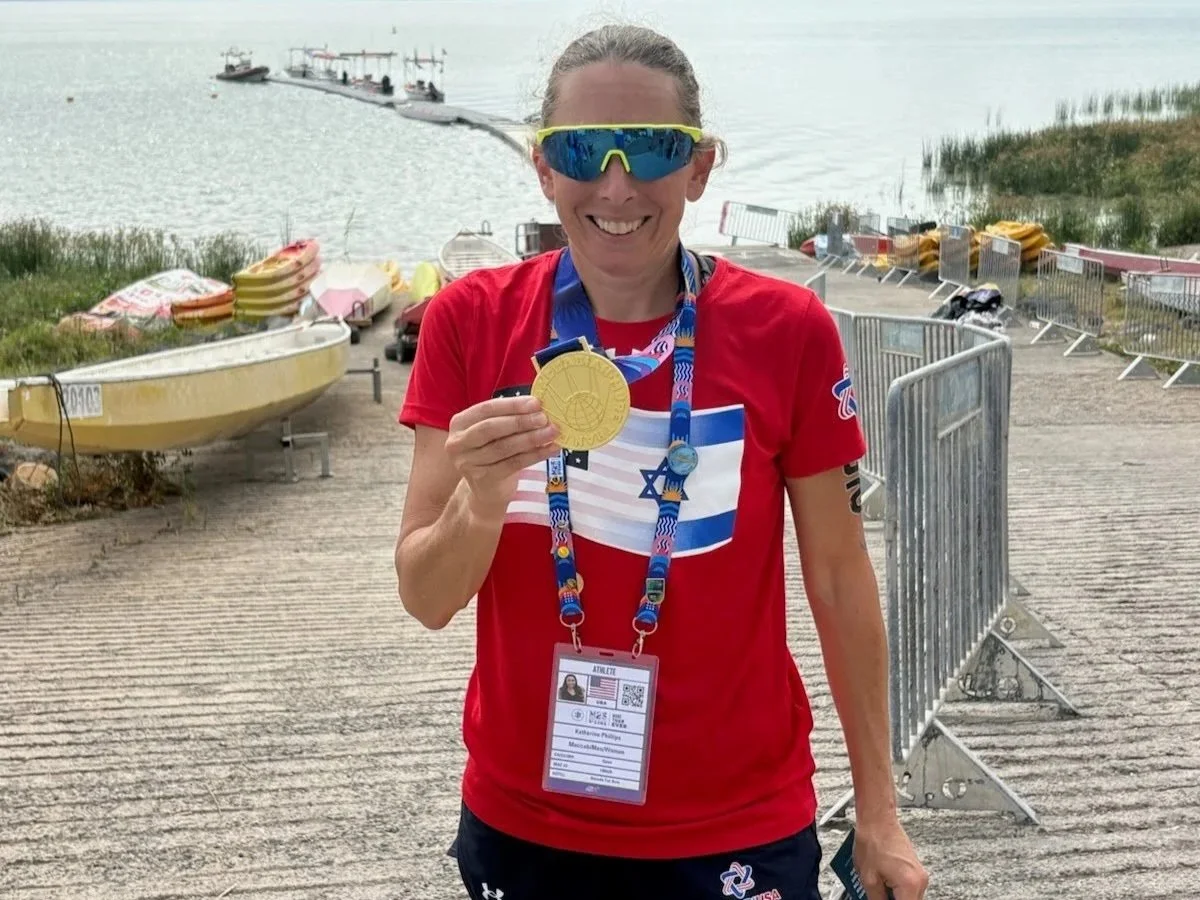
The canceled triathlon swim found its redemption at the Sea of Galilee, the lowest freshwater lake in the world. With permits pulled at the last minute, athletes woke at 2:30 a.m. and traveled north for a two‑lap, 3K open‑water race.
It was still the 4th of July back in the United States — a detail Katherine carried with her as she stepped onto the wobbly dock, racing for her country while her country celebrated.
When the horn sounded, Katherine broke free within 50 meters and settled into her rhythm. Waves kicked up as the sun rose over Jordan across the lake, but she stayed controlled, passing men from the earlier wave and maximizing her gap.
She surged toward the dock and broke the finishing tape as the first woman across the line, securing the overall women’s title — a fitting way to mark America’s birthday from halfway around the world.
Mission Three: Jerusalem — Half Marathon
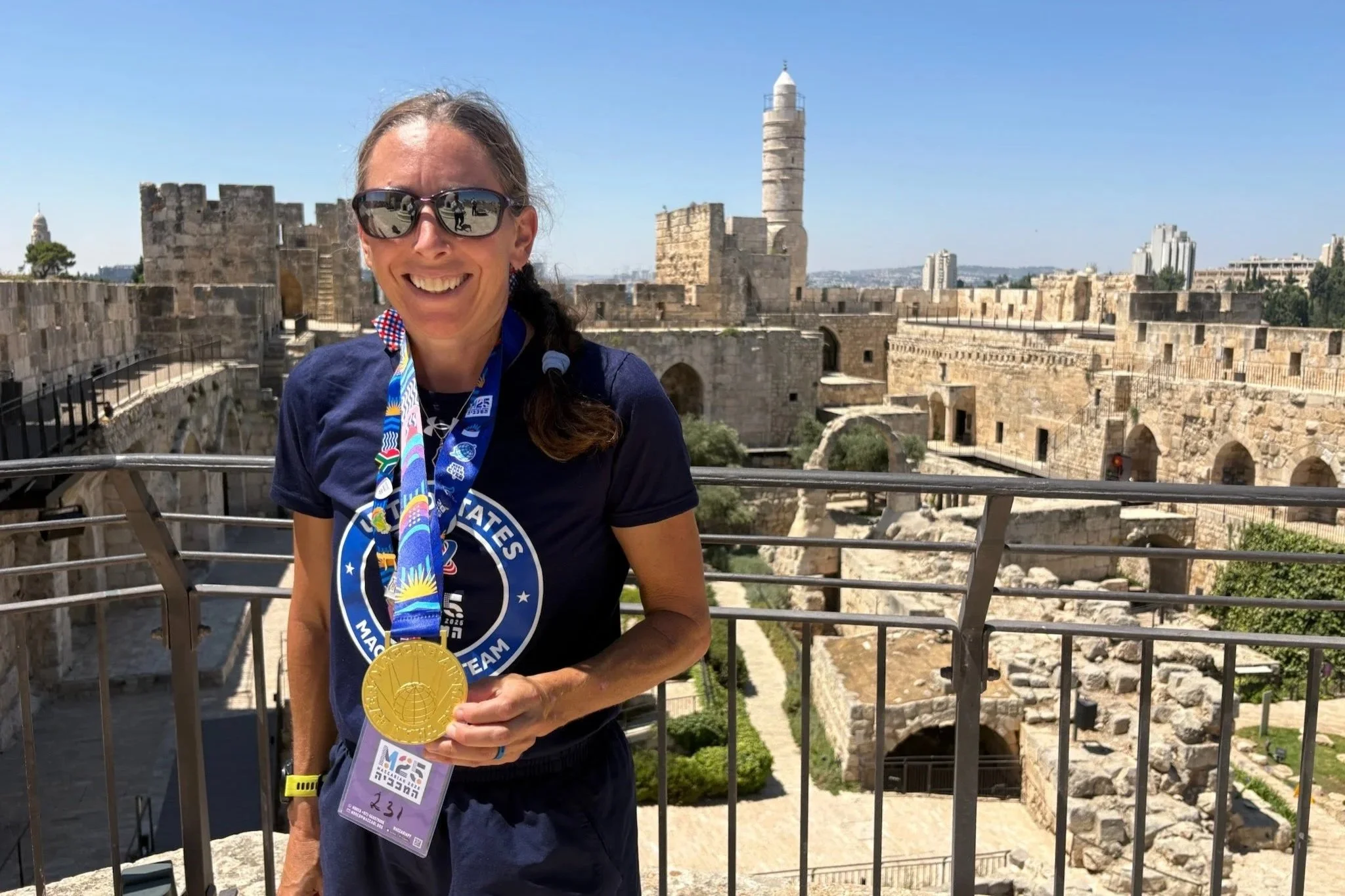
Jerusalem delivered a race unlike any other: an 8:10 p.m. start in front of the Knesset, nearly 1,000 feet of climbing, warm temperatures, tunnels, switchbacks, and a course that ran long.
The field surged early, sweeping Katherine forward. She stayed controlled, pacing off competitors through neighborhoods and the electric lap inside Teddy Stadium. GPS malfunctioned, power outages darkened the streets, and conservative families watched athletes stream past their homes.
The major climb — a mile and a half — became decisive. Katherine reeled in runners who had misjudged their pacing, protected her cumulative lead, and finished fourth overall in the race, which included the games track and field teams, and secured the Maccabi Man half‑marathon age group gold, placing 3rd overall among Maccabi Man competitors.
Mission Four: Southern Israel — Cycling Time Trial
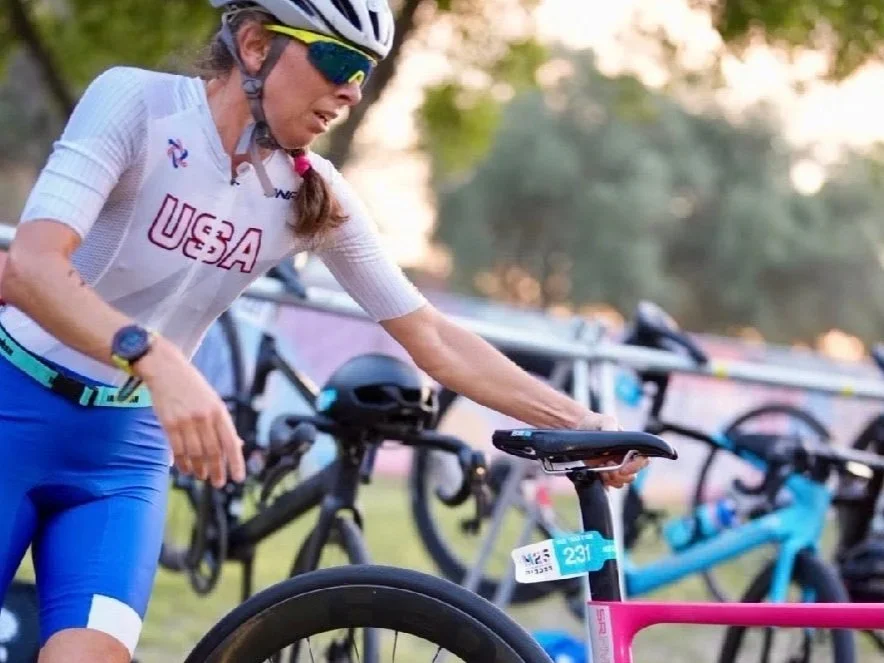
The final event, a 21K cycling time trial, unfolded on the Games’ official day of remembrance. Katherine carried a 15‑minute age group lead, 19 seconds behind 1st overall into the finale, but her legs were wrecked from Jerusalem’s downhills. She limped up stairs, fought off a cold, and stuffed ice found on the ground down her sports bra — the five‑second rule applying to Israeli pavement.
The course ran near the Nova massacre site and through farmland reminiscent of her childhood. IDF soldiers stood guard every mile. Temperatures hit 90°F, winds gusted to 23 mph, and the international athletes raced in the worst of it. Israel’s athletes, however, raced two hours later — in cooler temperatures, calmer winds, and with shorter start intervals between riders. It was a meaningful advantage, and one the international field had raised concerns about for days.
Even so, Katherine rode steady, avoided potholes, and kept her closest competitor in sight. She took back time at the turnaround, held her pace into the headwind, and crossed the line intact — securing 2nd woman overall and first age group for the full Maccabi Man series.
In a year defined by resilience and remembrance, Maccabi Man embodied the spirit of the Games. It demanded adaptability, grit, and composure under conditions that shifted by the hour. Athletes raced not just across Israel, but through its history, its grief, and its strength. For Katherine, the meaning ran even deeper.
Her husband is currently deployed with the U.S. Army — his fourth deployment in five years. Racing in Israel while he served abroad added weight and purpose to every mile. She was especially proud of the connections she made with Israeli military personnel and parents of the fallen throughout the Games — moments of shared understanding, mutual respect, and recognition that the U.S. and Israeli militaries share values yet differ in their realities.
And woven through all of it was the steady influence of Jordan Hogan, Katherine’s coach for nearly three years. Both born and raised in San Luis Obispo, California, both shaped by the same running club, Jordan has been a grounding force — a coach who understands not just Katherine’s physiology, but her hometown wiring, her competitive instincts, and the culture that shaped her. Their shared roots have created a coaching relationship built on trust, clarity, and belief. Katherine carried Jordan’s voice with her through every race in Israel.
Katherine completed the mission with precision:
Maccabi Man age‑group champion. 2nd woman overall. Open‑water swim overall champion. 1st age‑group half marathon, 3rd overall. 2nd age-group triathlon. Four races, four medals. We are so proud of you, Katherine!